Turning Gecko’s robotic inspections into powerful expert systems
From hand scans to point clouds
The target users: quality inspectors who have used hand held scanners and written down their results for their entire career. If I can’t make users comfortable with robotics controls, automated procedures, and 3D point clouds, we can’t operationalize our technology.
I have led our team’s effort to learn how operators do their job, how it fits into the organization’s operations, and how we can take on as much of their pain as possible. Our tech won’t survive if it’s not embedded into our users’ jobs.
[image-1]
[image-3]
Zero to one times three
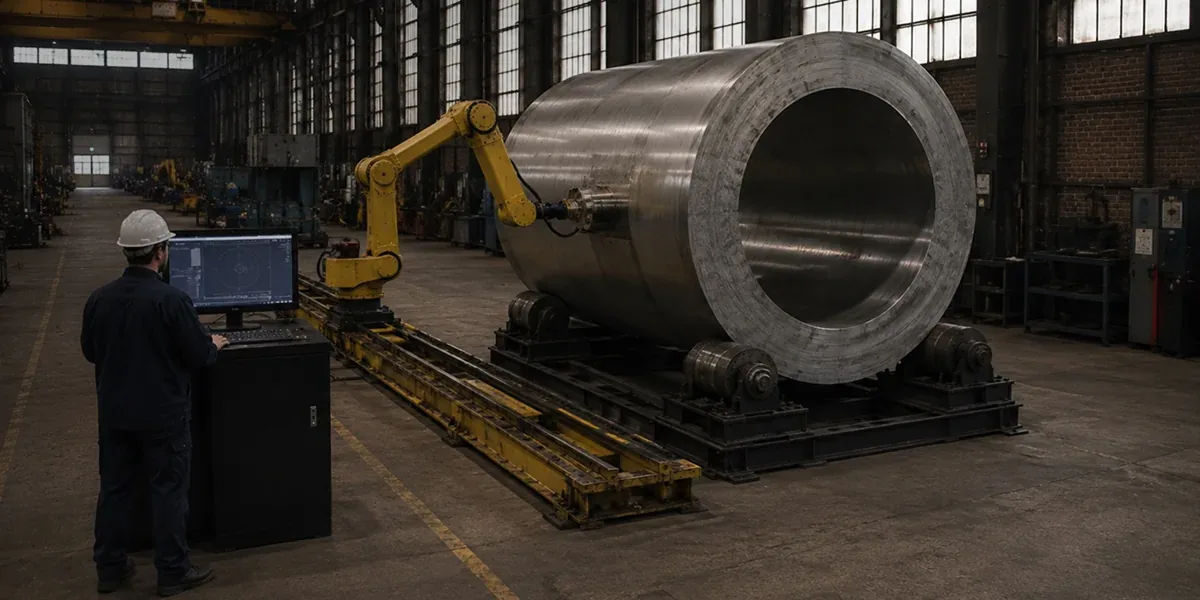
50 ton forgings. Sand mold castings. Automated welds. Very different systems for very different inspections.
As we rapidly developed systems for forges, foundries, and fabricators, I had to sprint to learn about military specs, localization systems, user knowledge, and robotic constraints across all of them.
I created an operator-centered design system and workflow templates based on the lessons learned designing Gecko’s first party robotics systems. This enabled all three teams to consume and contribute while we went 0-to-1 on three products simultaneously.
[image-2]
Everyone can be a designer
As the line of business grew, our product discovery needs outpaced our team’s growth. I ran training sessions and made videos to help our engineers, customer leads, and domain experts learn more effectively from users in the field.
[image-4]
- Created shared product infrastructure across three simultaneous deployments and multiple inspection modalities.
- Made unfamiliar 3D datasets accessible through interaction patterns grounded in inspectors’ existing 2D mental models.
- Increased the cross-functional team’s capacity to conduct and apply field research.
- Established reusable UX guidance for both engineers and AI-assisted development.